The Collaboration Support Office - CSO
 The Collaboration Support Office (CSO) supports the Collaborative
business model whereby NATO Nations
and partner Nations contribute their national resources to define,
conduct and promote cooperative research and information exchange.
The Collaboration Support Office (CSO) supports the Collaborative
business model whereby NATO Nations
and partner Nations contribute their national resources to define,
conduct and promote cooperative research and information exchange.
Technical Panels, Group and Committee
The total spectrum of this collaborative effort is addressed by six
Technical Panels who manage a wide range of scientific research
activities, a Group specialising in modelling and simulation, plus a
Committee dedicated to supporting the information management
needs of the organisation.
These Panels and Group are the power-house of the collaborative
model and are made up of national representatives as well as recognised
world-class scientists, engineers and information specialists. In
addition to providing critical technical oversight, they also provide a
communication link to military users and other NATO bodies.
The scientific and technological work is carried out by
Technical Teams, created under one or more of these
eight bodies, for specific research activities which have
a defined duration. These research activities can take a
variety of forms, including Task Groups, Workshops,
Symposia, Specialists' Meetings, Lecture Series and
Technical Courses.
In any given year, there are over 6000 Scientists and Engineers from NATO and its partners working on approximately
300 research activities being conducted by these Technical Teams. In all cases, these activities
result in the publication of highly valued scientific literature published by the STO. The results of the this research
can also be found in some specific peer-review journals.
An abstract of every publication can be viewed on this site. Depending on their
classification, the full text of many of these reports can be downloaded. CD-ROM copies may also be obtained
from one of the National Distribution Centres or can be purchased from one of the STO Sales Agencies, details
of which can be found on the website.
The STO actively supports NATO's Partnership Programme and Mediterranean Dialogue (MD) participation.
Each year, the STO seeks to increase the number of activities open to PfP and
MD Nations, and additionally sponsors specific plenary sessions of Board and
Panel meetings for these non-NATO Nations. For example, in the PoW, approximately 75% of the new activities are open to PfP Nations and 30% are open to MD Nations.
The STO also extends opportunities for collaborative research to our Global Partners and has opened
approximately 50% of the activities to these Nations.
As mentioned before, facilitating
the STO's collaborative effort is the job of the CSO. This small
executive office, located near Paris in Neuilly-sur-Seine (FRA), has
approximately 35 NATO civilian staff, and in addition, 15 military
and civilian personnel generously provided by Member Nations,
who serve on limited duration rotations.
In its role as facilitator, the CSO provides programme management
assistance to the STO Panels, serves as an interface between the
national scientific and NATO military communities and provides
S&T knowledge management through its website and databases.
Dr. Pavel Zůna, Director, NATO Collaboration Support Office
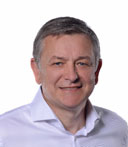 Dr. Pavel Zůna, Director, NATO CSO
Dr. Pavel Zůna serves as the Director, NATO STO Collaboration Support Office
(CSO) in Neuilly-sur-Seine, France since 1 July 2018. The CSO is the executive
office of the NATO Science & Technology Organization (STO) responsible for
coordinating, synchronizing and supporting defence and security science &
technology (S&T) activities between NATO member and partner Nations, comprising
a network of about 6000 scientists.
Dr. Zůna is a retired Colonel with a 30-year active military service career. He
served in different staff and commanding positions in the Czech Republic Ground
Forces up to the regiment level and was involved in military intelligence for 20
years. He retired as Deputy Director of the Military Counter-Intelligence and
Military Intelligence Service in 2005.
During his military career, he served as the Head of the Military Diplomacy
Branch and Assistant Defence Attaché to Belgium, as well as Defence Attaché to
the United Kingdom. He also represented the Czech Republic at the NATO
Intelligence Board, NATO Special Committee, EU Military Staff Intelligence
Board, National Committee for the Coordination of the Foreign Security Policy
and Allied Joint Operation Doctrine.
After retiring from active military service, he worked as analyst and Head of
office at the Doctrine Institute, Training Command – Military Academy. From 2010
until 2018, he had several responsibilities:
He assumed the position of Head of the Life-Long Learning Department at the
University of Defence in Brno. In this position, he was responsible for senior
officers’ career education, and security and defence strategic and operational
research and development.
He was academically active at various civilian universities, involved in both
the NATO Education Enhancement Programme and the White Book on Defence Working
Group, Vice-Chair of the National Armed Forces Development Concept Working
Group, member of the University of Defence Scientific Committee, and Co-Director
of the National Operational Concept Development Board.
He represented the Czech Republic Ministry of Defence on the NATO STO System
Analysis and Studies (SAS) Panel where he served as Vice-Chairman and Chairman
from 2014 to 2018.
Dr. Zůna earned a Master’s degree in Chemistry, specializing in CBRN, from the
Ground Forces University of Vyškov in 1984, a post-graduate degree in
Information Management and Intelligence from the Military Academy of Brno in
1990, a Master’s degree in Strategic Studies from the US Army War College in
2006, and a Doctorate degree in Economics and Management from the Defence
University of Brno in 2012.
Dr. Zůna is married to Svatava and they have two grown up sons. They are both
interested in cycling, skiing, tourism, and cultural events.
CSO - July 2018
Mr. John-Mikal Størdal, Director, NATO Collaboration Support Office
 Mr. John-Mikal Størdal, Director, NATO CSO
John-Mikal Størdal serves as the Director of the NATO Science & Technology Organization’s (STO) Collaboration Support Office (CSO) in Neuilly-sur-Seine, France since 1 July 2021.
As an executive body of the NATO STO, the CSO is responsible for coordinating, synchronising and supporting defence- and security-related science and technology (S&T) research and development (R&D) activities between NATO member and partner Nations. In 2022, more than 300 activities were carried out under the STO Collaborative Programme of Work (CPoW), which is underpinned by a collaborative network of about 5,000 scientists – the largest defence S&T network in the world – from across the Alliance.
Prior to taking up duties as CSO Director, Mr Størdal was the Director General of the Norwegian Defence Research Establishment (FFI), the key institution for defence-related R&D in Norway. He held various other positions at FFI over the course of more than 30 years at the institution, including Chief of Staff, Director of Research and Principal Scientist. He was appointed Director General in 2012.
From 2012-2021, he served as the Norwegian Principal Member on the NATO Science & Technology Board (STB) and the European Defence Agency (EDA) Research & Technology Steering Board.
Mr Størdal holds a Master’s degree in aeronautics and astronautics from the Massachusetts Institute of Technology (MIT), and a Diploma Engineering degree in electrical engineering and computer science from the Norwegian Institute of Technology (NTNU). He was also a Fulbright Scholar from 1991-92, and completed the Senior Executive Course at the Norwegian National Defence College in 2009. Mr Størdal is a member of the Norwegian Academy of Technological Sciences (NTVA).
Mr. Størdal is married to Mona, and has three adult children. In his spare time, he enjoys hiking in the mountains and general outdoor activities.
CSO, Jun. 2023


